Types of Shower Doors: Which Option is Best for You?
When designing or remodeling a bathroom, the shower enclosure is more than just a finishing detail. The type of enclosure you choose affects how you enter the shower, how much space the shower requires, how well it contains water, and how open or enclosed the bathroom feels. There are several ways to enclose a shower, ranging from traditional swinging and sliding glass doors to simple curtains and creative glass partitions. While many of these options can be purchased as standard products, unusual layouts and design preferences can also push a project into custom-glass territory. Understanding the differences between each option can help you choose an enclosure that works for both the design and the practical requirements of your bathroom.
1. Swinging Shower Doors
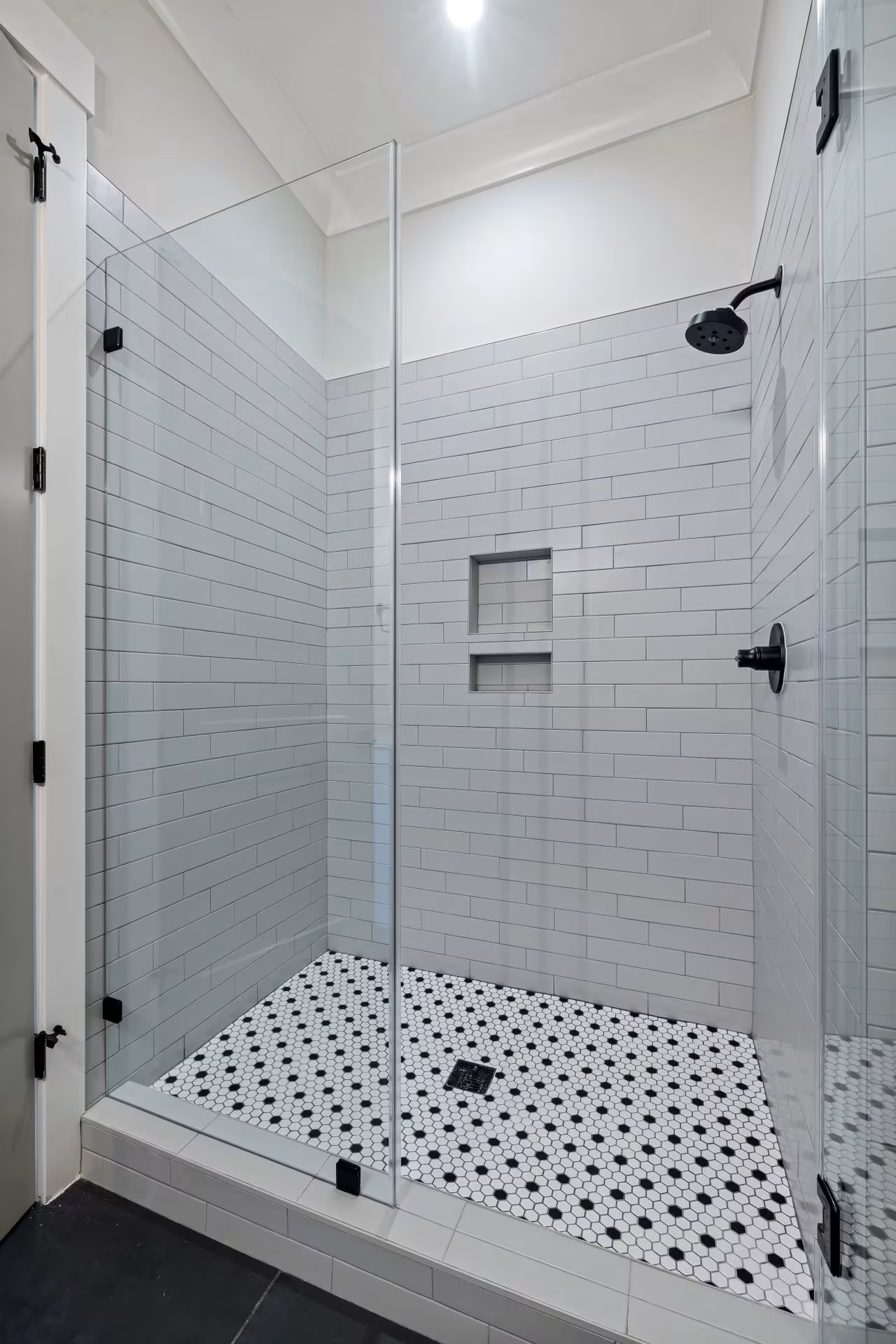
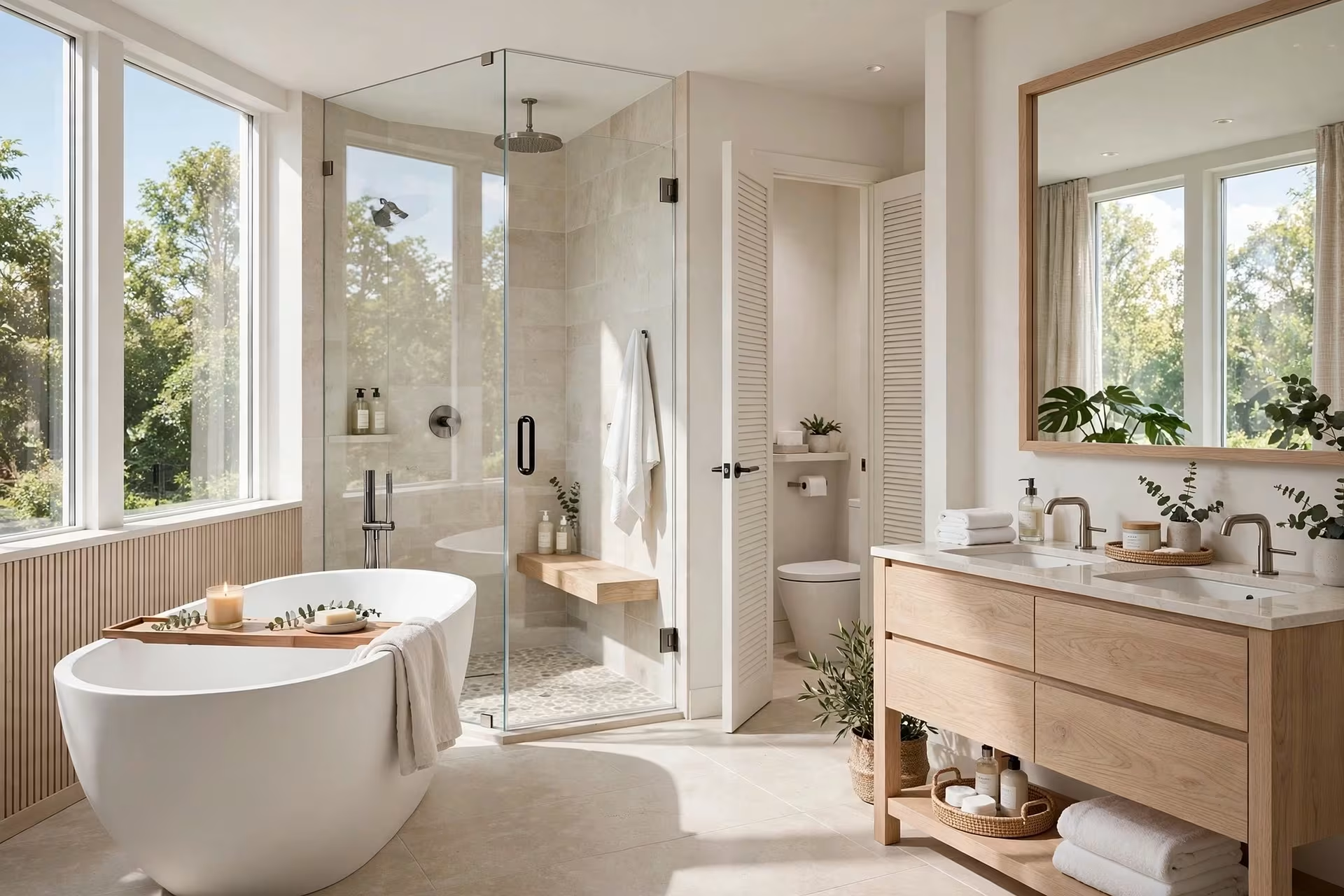
Swinging, or hinged, shower doors are one of the simplest and most traditional glass-enclosure options. The door pivots on hinges and opens into or out of the shower, providing a wide, unobstructed entrance when there is enough clearance. One advantage over sliding doors is that swinging doors don’t require a track or bar spanning above the shower entrance. This can be especially appealing for taller people who don’t want to duck underneath an overhead track when entering the shower. The downside is that the door needs enough clearance to operate without hitting a vanity, toilet, wall, or other fixture.
There are several variations on the basic swinging-door concept. Bi-fold doors use multiple panels that fold together as they open, reducing the amount of clearance needed. Corner-swing and neo-angle doors can be used with corner showers where a traditional rectangular enclosure isn’t the best fit. These configurations can make better use of tight or unusual spaces while maintaining a swinging entrance. Some neo-angle corner showers can also use sliding glass doors, although unusual angles and configurations begin to move the project toward custom-glass work.
It’s worth noting that these less-common configurations aren’t necessarily completely custom. Many manufacturers offer stock versions of bi-fold, corner-swing, and neo-angle shower doors. However, once you start changing dimensions, combining unusual shapes, or designing around an unconventional bathroom layout, you’re increasingly entering custom territory.
2. Sliding Shower Doors and Shower Curtains
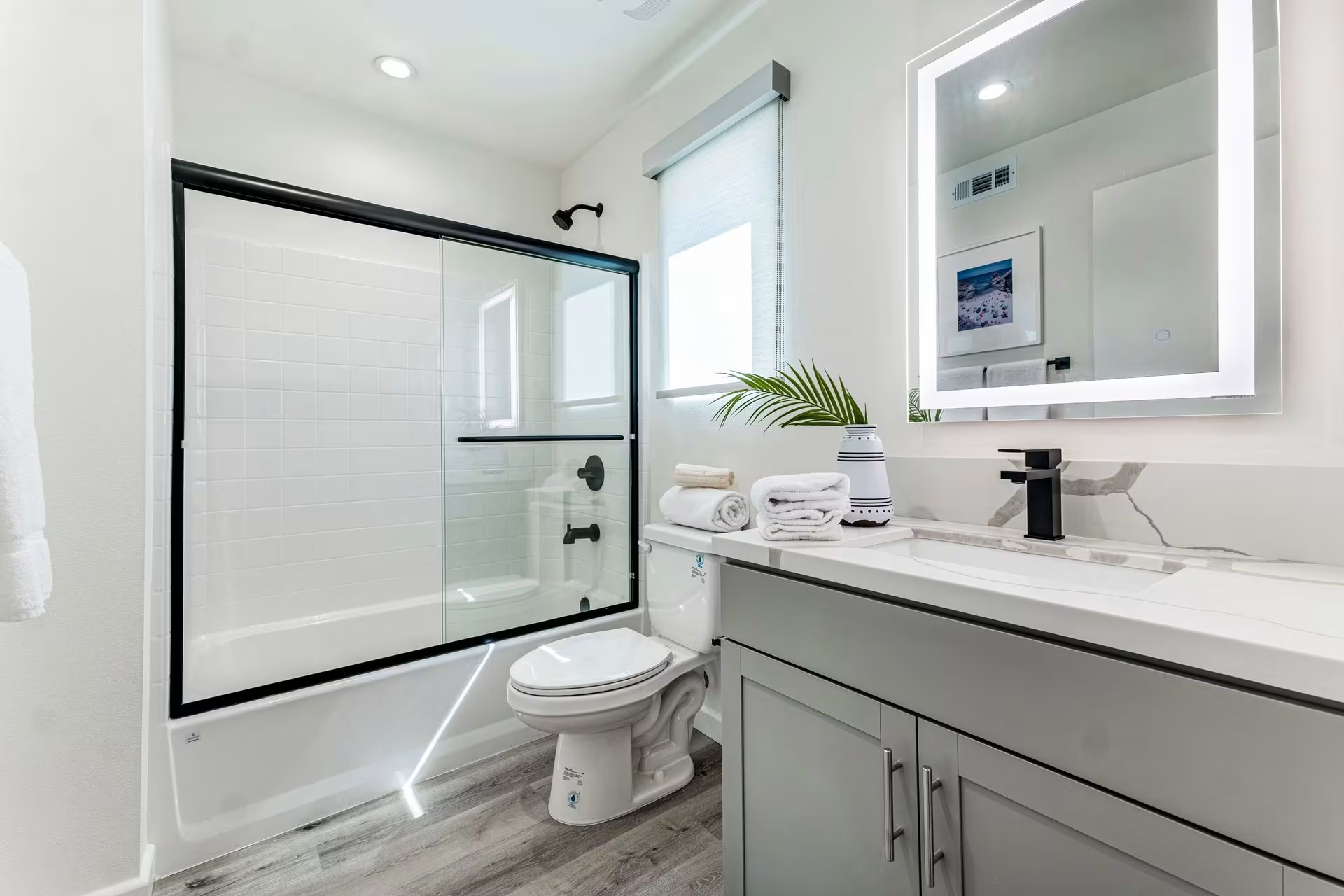
Sliding glass doors, often called bypass doors, are another common option for showers and tub enclosures. Instead of swinging outward or inward, two or more glass panels slide past one another along a track. This makes them particularly useful when there isn’t enough room for a swinging door to operate. The trade-off is that the overlapping glass panels and tracks can be more involved to clean, and the size of the opening is limited by the configuration of the sliding panels.
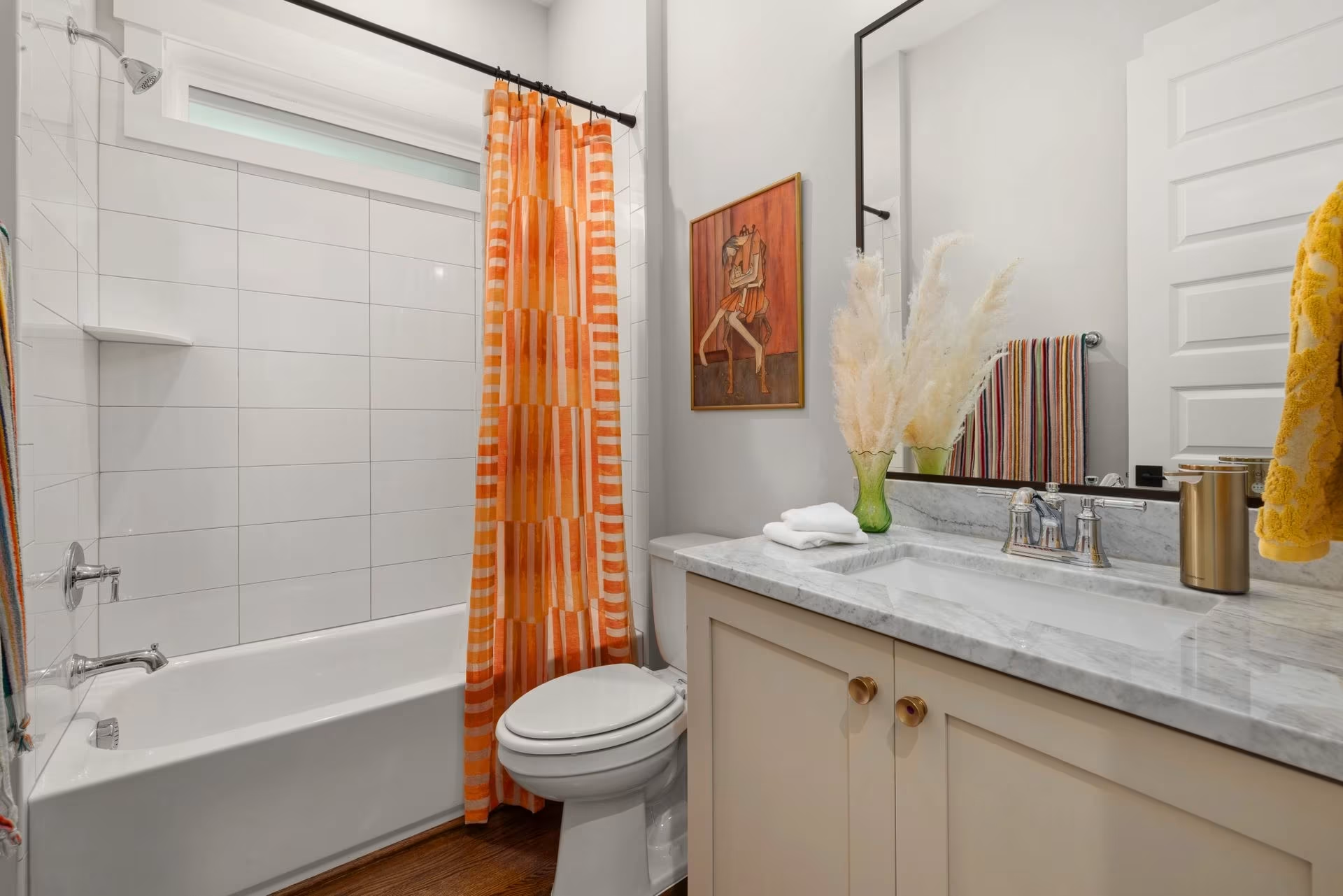
A shower curtain and curtain rod is the main alternative to a glass shower enclosure. Curtains are sometimes viewed as simply the cheap solution, but that isn’t necessarily fair. In some bathrooms, a curtain genuinely makes the most sense. They are inexpensive to replace, easy to remove and clean, and don’t require the permanent glass enclosure that comes with a door. They’re also particularly practical for certain tub-shower combinations.
Sliding glass doors and shower curtains have one interesting thing in common: both typically have something running above the shower entrance. A sliding door has its overhead track, while a curtain has its curtain rod. For taller people, this is worth considering because the overhead element can affect how comfortable it is to enter the shower. A swinging door or certain partition configurations can eliminate that overhead obstruction entirely.
3. Glass Partitions
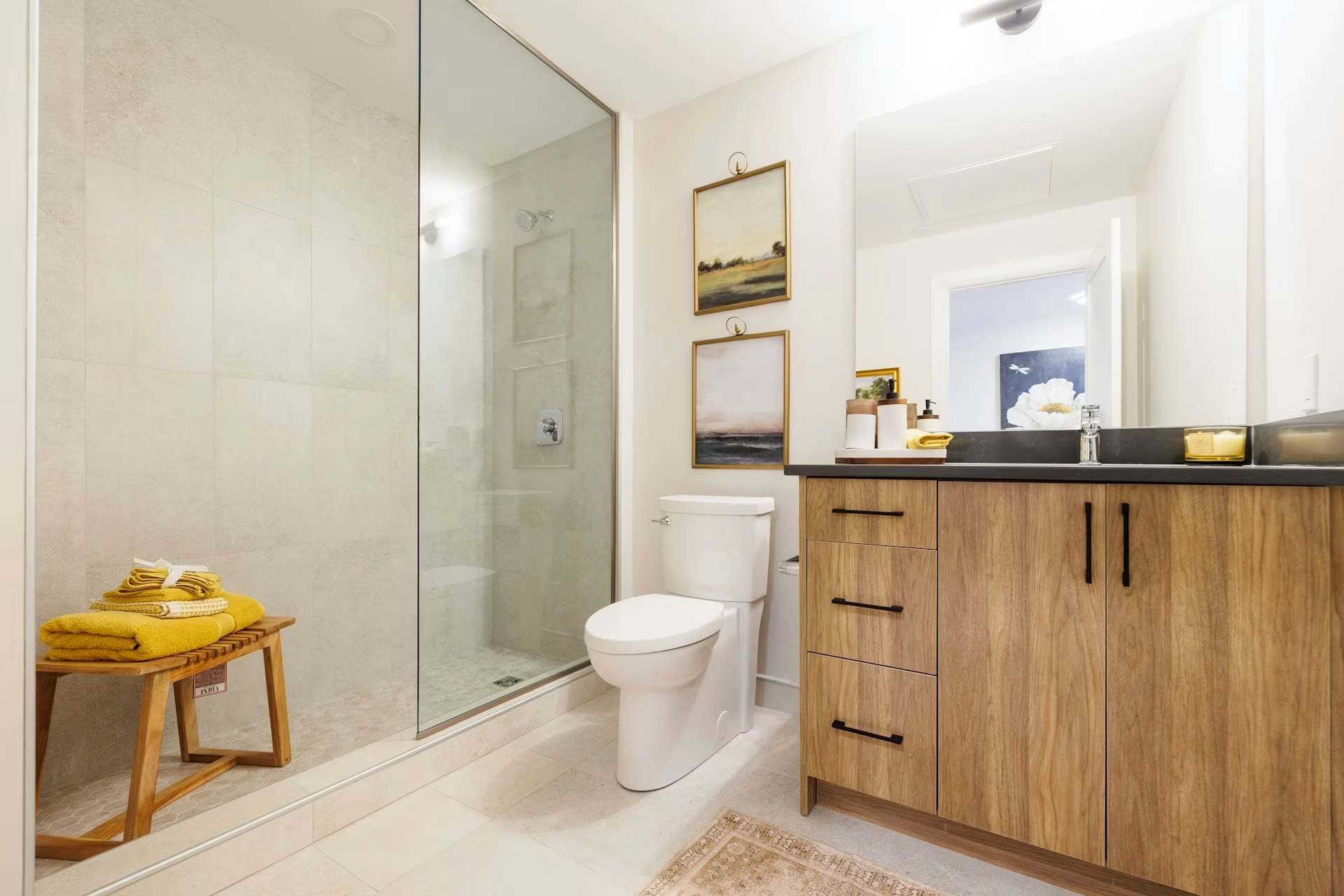
Glass partitions take a different approach by creating a barrier without necessarily creating a traditional shower door. A partition can be a full-height piece of glass extending from the floor to the ceiling, or it can sit on top of a knee wall or pony wall. These panels can be used with shower curbs, tub tops, or curbless shower applications, making them one of the more flexible options for modern bathroom layouts.
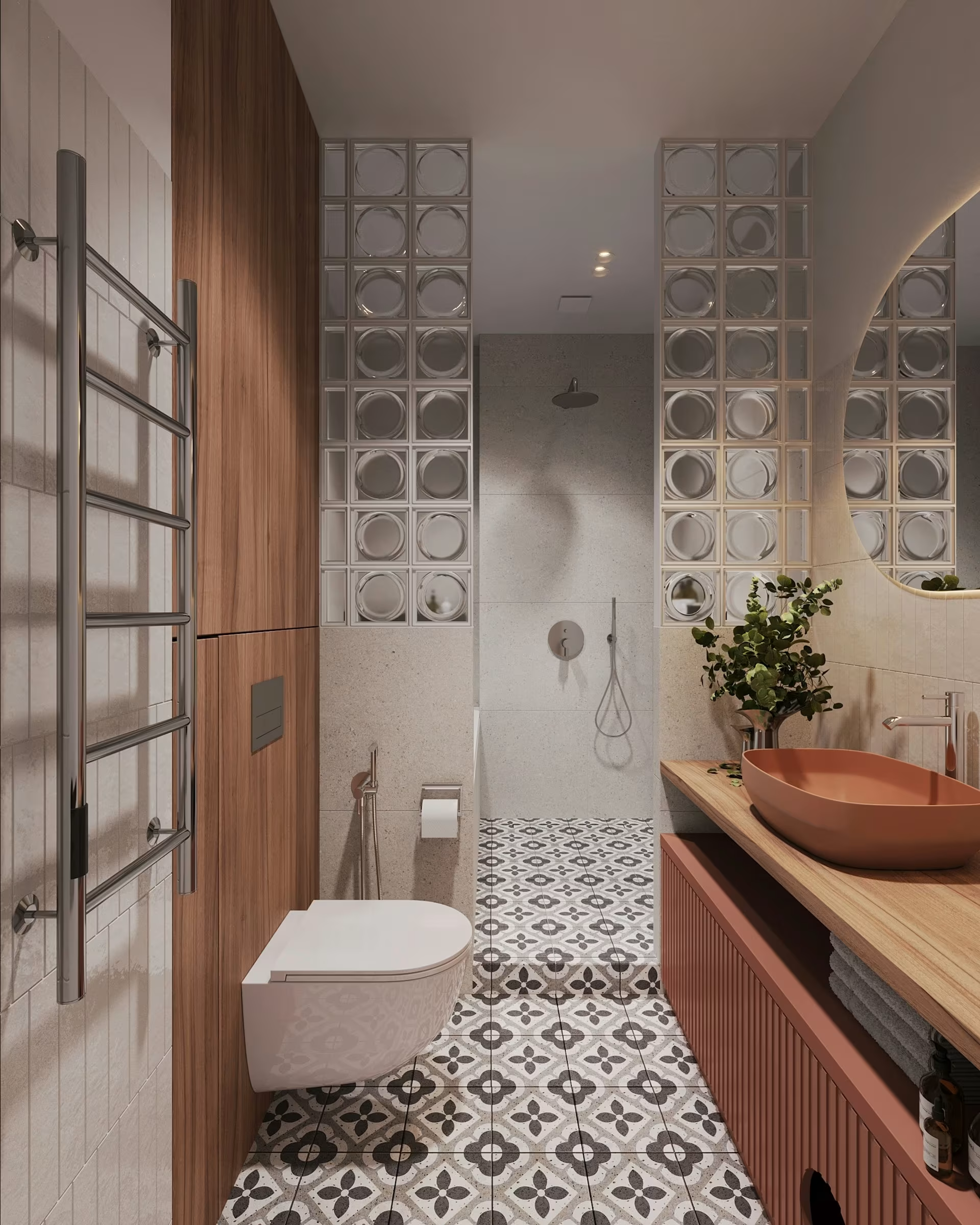
Unlike large rectangular sliding or swinging-door units, partitions give you considerably more freedom to play with the shape, size, height, and appearance of the glass. This is also where I personally think glass texture can become especially interesting. Rather than putting textured glass on a moving door that you’re constantly opening and closing, I prefer the idea of using textures on a stationary partition. Fluted glass, glass block, patterned glass, and other textured or obscured glass can add privacy and visual interest while becoming a design feature in the bathroom itself.
The major consideration with an open partition is water containment. A partition doesn’t completely close off the shower, so there is a greater chance of water splashing into the surrounding bathroom. The showerhead location, spray direction, size and position of the glass, floor slope, and drain location all become important. A properly designed partition can work extremely well, but it shouldn’t be treated as simply putting a piece of glass wherever it looks good.
4. Custom Glass and Choosing the Right Option
Once you move beyond the standard configurations, there is a huge amount of flexibility available through custom glass. Unusual shower shapes, oversized panels, multiple-panel arrangements, custom angles, curved glass, double-door configurations, and other specialty designs can all be created when a stock enclosure doesn’t fit the space. Even some of the configurations discussed above—such as neo-angle enclosures or unusual corner arrangements—can transition from a standard product into custom glass depending on the dimensions and design. Customization can solve difficult layout problems, but it also means that measurements, hardware, clearances, and installation become increasingly important.
Ultimately, there isn’t one shower enclosure that is best for every bathroom. Swinging doors can provide a clean, unobstructed entrance without an overhead track, while sliding doors can save valuable clearance in a smaller bathroom. Curtains can be a practical and intentionally chosen solution rather than merely a budget alternative. Partitions offer a more open appearance and provide an opportunity to incorporate interesting glass textures, but require careful planning to control water. And when none of the standard options quite work, custom glass can turn an unusual layout into a functional part of the design. The best choice is the one that balances appearance with the realities of the space, water control, maintenance, accessibility, and how the shower will actually be used.

About the author
Popular Categories
- No categories
Useful Links
Links I found useful and wanted to share.